Friday, December 16, 2016

Pan's Labrynith (2006) and Hercules (1997)


From the get go, these two films don't look like they'd have much in common. Pan's Labrynith (directed and written by Guillermo del Toro) is a live action fantasy horror film set in Spain during the Spanish civil war, with a girl trying to escape her terrible reality. Hercules (directed by John Musker and Ron Clements and written by Ron Clements, John Musker, Donald McEnery, Bob Shaw, and Irene Mecchi) is a animated musical comedy about a young man who finds out he is the son of gods and must prove himself to return as one of them. So how are these similar? I'm glad you asked.
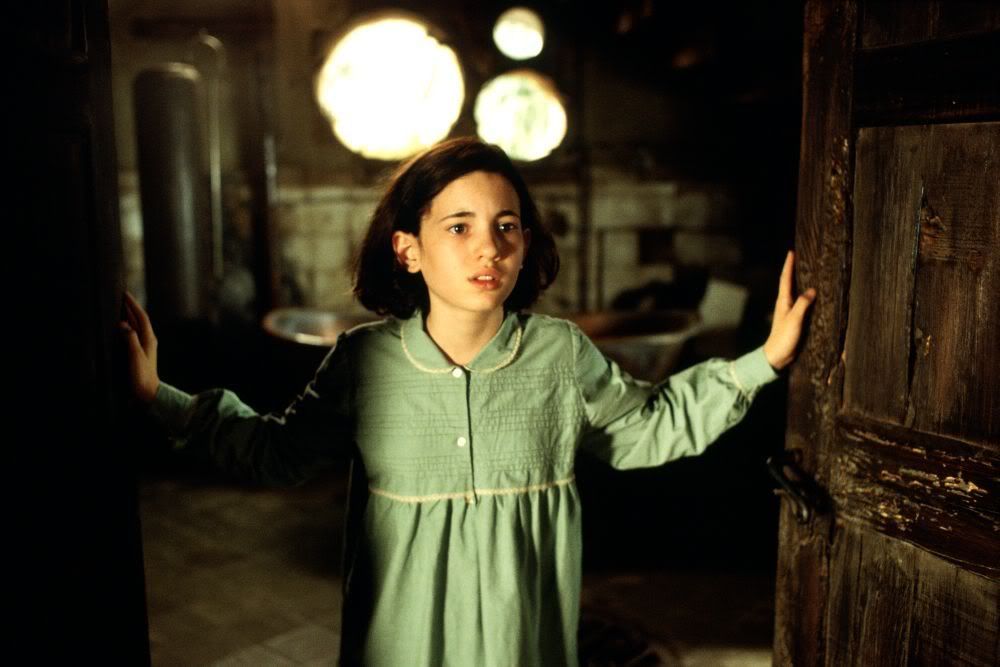


Both stories focus on a young person who feels trapped in their life situation and feel that they'd be better off being somewhere (and being someone) else. This established in both of their back stories at the beginning of each film. In Ofelia's story, the film begins with the narrator telling the tale of the princess of the Underworld leaving to see the sun, and how her subjects await the day for here soul to return. For Hercules' story, we see at the beginning of the film he was stolen from Olympus and almost murdered by evil henchmen until a human couple found him. Both characters don't feel they belong where they are right now, and that they are destined for something greater.
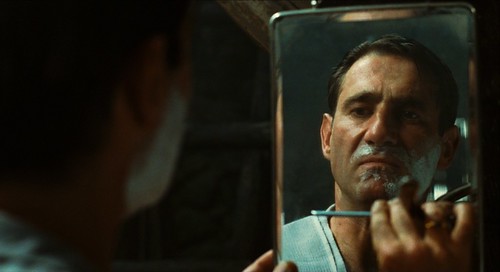
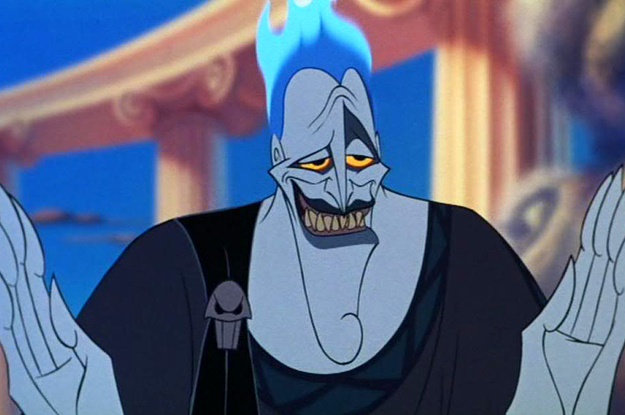
Both films have strong antagonists related to the protagonist and try prevent them from reaching their goal. In Pan's Labyrinth, the antagonist is Captain Vidal, who is Ofelia's stepfather. He is cruel, ruthless, and has no love for Ofelia or her mother. His goal is to continue to hold power and defeat the rebels in the mountains. In Hercules, the antagonist is Hades, ruler of the Underworld. While it is not explicitly said in the film, Hades in Zeus' brother in Greek mythology, so he would be Hercules' uncle. His goal is to destroy Hercules so that nothing stands in the way of him taking over Olympus. Both antagonists are scheming, witty, and a huge danger to the protagonists quest.


Both characters find out through magical means that they are supernatural royalty. For Ofelia, she finds out through the fairies who lead her to the labyrinth where the faun tells her of her history, and that she must complete three tasks by the full moon in order to return to her throne. For Hercules, he goes to the Temple of Zeus, where Zeus tells him of his heritage and that he must prove himself a true hero in order to return to Olympus. Both characters are confronted with this enormous truth about themselves, and decide to set out to fulfill these tasks in order to return where they belong.

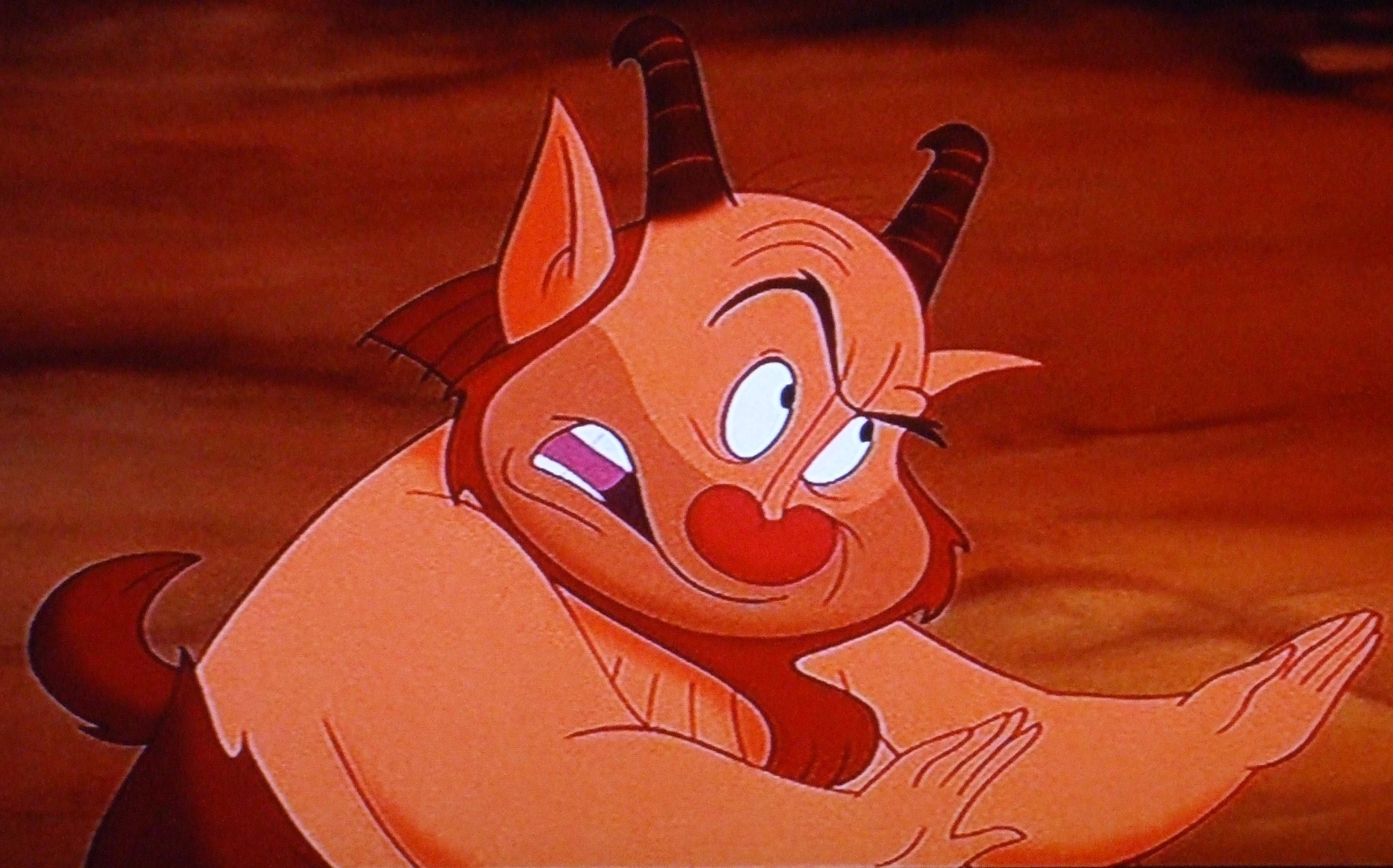
Both characters are guided on their quest by mythical, animalistic creatures. Ofelia has the guidance of the faun, who instructs her on quests and reminds her of her short time to complete them. Phil is Hercules' trainer and mentor, who gets him in "hero" shape so that he's ready to face any challenge he needs to. Both characters, while not only looking similar, use their influence to guide the protagonist in the direction they want to go. Also, both of these characters abandon the protagonist and leave them to face the dangers alone, but return when most needed (the faun returns right before the full moon and when the rebels attack, and Phil returns right as Hercules' almost gives up when battling the Cyclops).


Both protagonists in these films faces nasty, vile horrors in order to complete their mission. Ofelia not only had to crawl into the tree to confront the toad, but she was almost eaten alive by the Pale Man in his layer during her second task. Hercules' first battle as a hero was against the Hydra, who grows three heads for every one cut off, making it an almost impossible for to defeat. Both creatures are disturbing in design (Pale Man with his saggy skin and eyes in his hands, Hydra with its heads erupting from its neck), and almost defeat our protagonists. They almost bring their quest to an end.

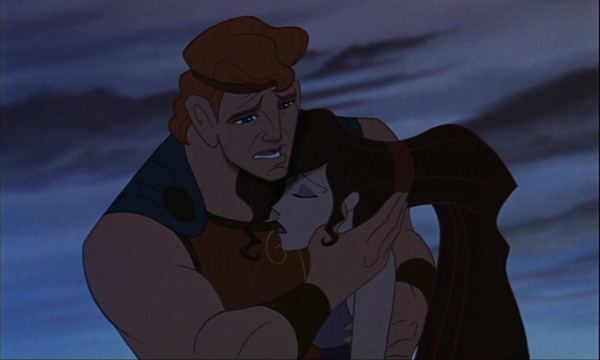
Both characters at one point give up their quest when someone they love is in danger. Ofelia is told she must let her brother be harmed in order for her to return to the Underworld, but she refuses to let him be hurt, giving up her spot as princess to save him. Hercules loses Meg when she sacrifices herself to save him, and he risks his life to go to Hades to get her soul back. What is very interesting about these scenes is that both of them are set in very dark green, blue, and grey tones. The color scheme is very cold, and you can feel the turmoil these characters feel about the choices they have to make.
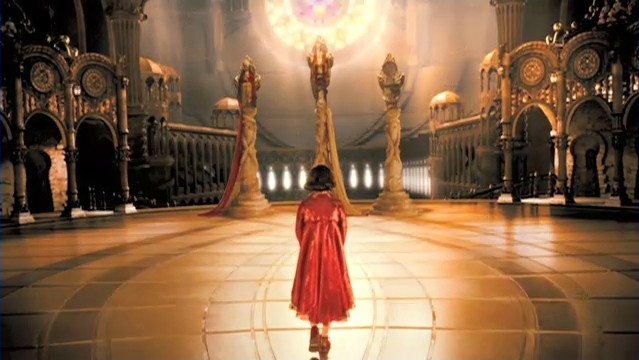

Both are shown their homelands at the end of the film. Ofelia is returned as princess, where she is dressed in a red cloak and meets the king and queen for the first time. Hercules is wearing purple after completes his task, and is shown Olympus for the first time. Both of these scenes are warm-toned, with reds, oranges, and golds dominating the color scheme. This is to contrast the previous sad scenes, and to show the victory of the protagonists in finally reaching home.

Del Toro reflecting off of Hercules works in his advantage, this structure of story is a very strong and solid one. The idea of using the story/myth structure of the lost heir who must return to their homeland works wonderfully along the gritty, brutal reality of post-Civil War Spain, as it allows Ofelia (and the audience) a chance to distance themselves from the real horrors happening and be enveloped in fairy tale. Hercules' "lost heir" narrative was a good choice, and it is a solid narrative to choose when dealing with a child who does not fit in with either her family or her own reality.



Hercules and Pan's Labyrinth


For my final analysis, I will be comparing Pan's Labyrinth with Hercules. Both tell the tale of a young person who feels trapped in their lives, and are given an opportunity via magical/supernatural ways to be ascended into glory and royalty. These characters both faces challenges that need to be completed in order to show that they are worthy of their supposed place in this royalty, and must make tough decisions regarding their loved ones in order to make it to their final destination.

Feature Blogger: Whale Rider Question

It is assumed from the beginning of the film that Pai's brother, if he had survived, would be trained to be the village's new chief, and that Pai would not be focused on like had in the film .But is that so? Would she have been as determined to prove herself worthy of chief if her brother was trained to be on since birth? And would do you think would happen if her brother failed every single test needed to determine a new chief?

I Feel Like I Win When I Lose: Muriel's Wedding


This is one of my favorite scenes of all time for well-executed music. Muriel's Wedding has many ABBA songs play throughout the film, as they are Muriel's favorite band and the songs reflect how shes feeling/the mood of the scene. In this particular scene, Muriel has just connected with Rhonda on the holiday that the four nasty women told she couldn't come along with because she embarrasses them. The music reflects the mood perfectly, as the song about winning and defeated plays while Rhonda and Muriel bask in their new friendship while the four nasty women sulk because they found Nicole had been sleeping with Tanya's husband. The choreography and costumes is well-executed in this scene, as they are imitating ABBA's "Mamma Mia" music video almost shot for shot. 


What makes this scene even more fun is earlier in the film these women tore Muriel down for listening to ABBA when everyone else listens to modern music. However, every single person (except these women) gets up and dances, loving every minute of Rhonda and Muriel's performance. This scene is very well executed and is definitely one of my favorites.

Refresh in Culture: Water


As someone who is fairly familiar with Indian and Hindu history and culture, it surprised me a bit when I learned about how widows were treated in India before it became became independent from England. But then again, I'm not really surprised considering the Hindu culture and the caste system, I thoroughly enjoyed seeing this part of Indian culture on screen, as most films I have seen set in India are films written and directed by white people (usually British). It was fascinating to see what a young girl's life would mean after being forced into a marriage at such a young age and then having to live as a widow before she reached the age of ten. All in all, this film was a good reminder in reserving my judgements when learning about different cultures, and how to earn from them rather than make rash conclusions.

Last Bullet: Deadpool


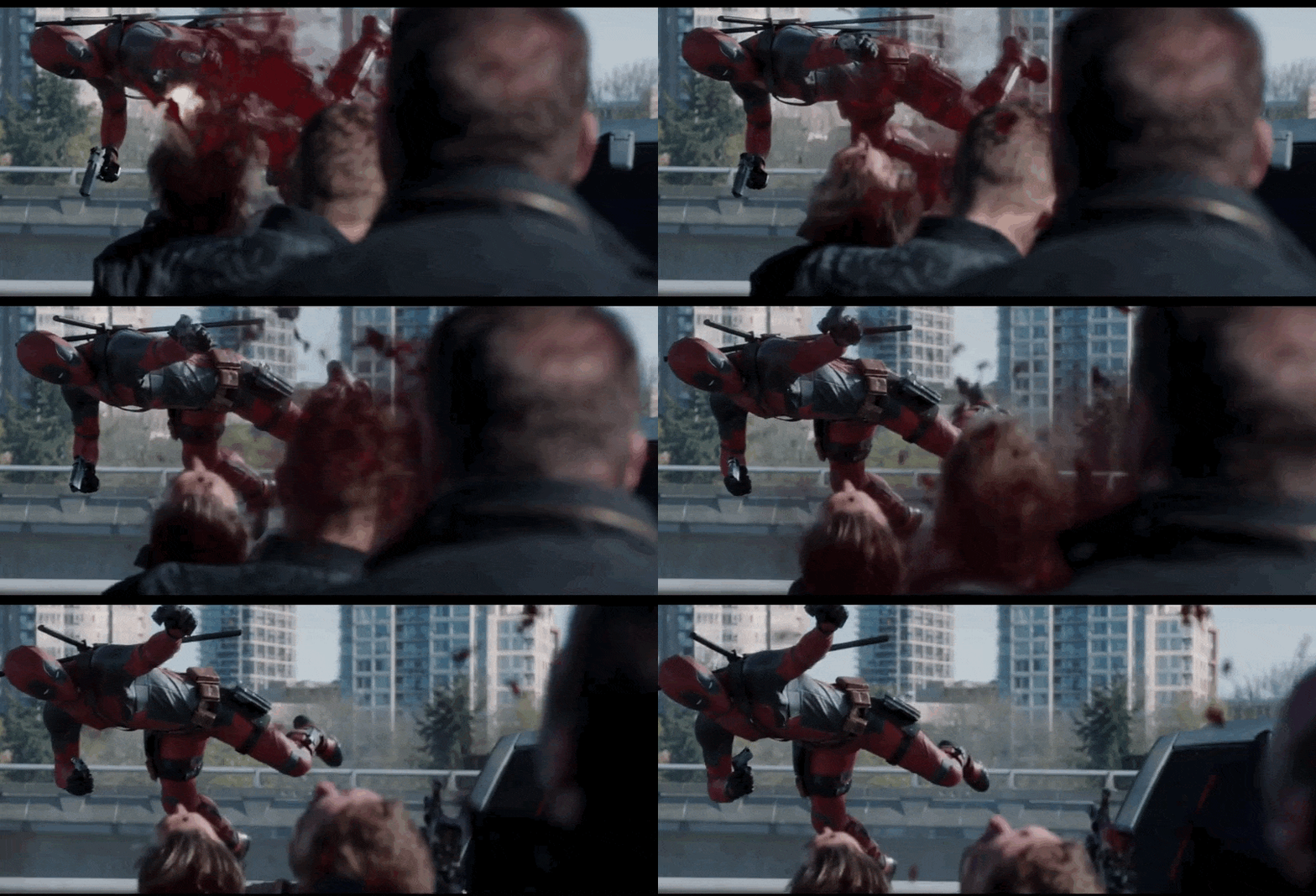
A very cool special effect is from the opening scene of Deadpool. Deadpool forogt his ammo at home, so he counts every bullet he shoots to make sure it's not wasted. In the climax of this scene, as the bad guys line up to surprise attack him, Deadpool jumps from behind a car, flips midair, and uses the last bullet to shoot through each of the hit-man's heads. The scene uses a great job of over-the-top blood and guts to exemplify the master use of the last bullet, as over the top violence is Deadpool's style. It's a well-executed effect that fits the feel of the film just right.


Run Away From The Past: Tsotsi and Music


One thing that can be said for the film Tsotsi is how wonderfully arranged the soundtrack is in the film. The music throughout the film is rich in its feel, language, and style to reflect the environment and action of the film. One particular scene where this is done well is right after Tsotsi beat up Boston in the bar and then fled. The music is very fast paced and thrilling, allowing the audience to feel the adrenaline rush that Tsosti feels as he runs. The music does not lose tempo and continues this fast, strong pace as we see the scene flash back and forth between older Tsotsi and younger Tsotsi running away, letting the aduience know that he has something like this before in his life.

Contemporary Traditions: Whale Rider


When looking at The Whale Rider from a historical perspective, one particular way of looking at it is the contemporary vs. the traditional. The village is at constant battle with holding on to the old sacred traditions, while at the same time trying to find a balance with modern contemporary culture. This is seen especially in the scene where Hemi is excited to have his dad watch him demonstrate the use of the taiaha, only to leave right after he is done and then go hang with his buddies instead. We see this also in how the kids and the adults talk to each other: the kids say how they can't wait to be older so they can leave the village and start anew, while the adults (like Koro) hang on to the traditions and try to keep them alive as hard as they can. The one who finds herself caught in the middle is Paikea, who wants to be the next leader of their tribe but is forbidden to. Looking at this film from a historical standpoint will help the viewers see this constant battle between the contemporary and the traditional.

Oh Portland!: Portlandia


This scene is a great spoof on the use of dissolves. In season 2 episode 9 of Portlandia, Carrie and Fred try to ban the Olympics from Portland and convince the mayor to swear to never hos them there. However, after meeting Olympian diver Greg Louganis, who convinces why the Olympics are important, the rush to tell the mayor to keep the Olympics and are accidentally awarded medals for winning a triathlon (after just basically running around town). The mayor then passionately sings the Portland anthem. This scene's use of dissolves spoof the over-dramatic style used in sports, whether filming live sports or even sports films. Literally every shot transitions into the next with a dissolve, exaggerating how over-the-top the whole situation is.

A Naked Blonde Walks Into a Bar: Breakfast Club


This is scene is truly one of my favorites of all time, mainly because of how it was shot. The camera tilts up to show how Bender strategically stacked a bunch of stuff on top of each other to get to the ceiling, only to see the tile slide back when the camera gets there. We then see Bender in the ceiling, slowly crawling as the camera follows him. The camera matches Bender's speed as he crawls: slow and careful at first, then speeding up as he gets cocky. When he get to the end of his joke, the camera freezes as he pauses, and that's when we see him fall straight into the library.

Circle Never Ends: The Bowl in The Road Home

In The Road Home, the bowl that Zhao uses to serve food to the teacher becomes a significant symbol throughout the film.

In the beginning of the film, the bowl hold no special meaning, it is common among the other bowls. But when the teacher comes to the village and helps to start building the school, Zhao uses this bowl to make her dish stand out, so that he will recognize the food and dish as hers. Initially he does not recognize the bowl when she points it to him, every time after he eats out of her bowl. This is symbolizes the strong bond that the two begin to create. However, this bowl goes through a lot.


When the teacher leaves after being called back to the city by the government, Zhao makes a dish for him in the bowl for him to take with him. He leaves before she can give it to him, and she runs after them on foot through the hills to deliver the dish. However, she trips and bowl is cracked in many pieces. This represents both Zhao's heart at that point in her life, and the state of her relationship with the teacher. She is heart broken and devastated, and the state of their relationship seems broken and fragmented. There is hope, however.


Zhao's mother takes the bowl to be repaired for her, since Zhao has become deathly ill and has become filled with despair since the teacher's departure. Even the bowl repairman comments how it might be worth more her time to get a new bowl instead of repairing this one, but the mother understands how much the bowl means to Zhao. The bowl being repaired symbolizes the effort needs and required to keep relationships alive, and that at times it is more worth it to repair something that may be damaged or seem hopeless than to move on.

Close-up After the Crash: Whiplash


This scene from Whiplash is an incredibly disturbing yet powerful use of camera angles. In this scene, Andrew is late to a competition because his bus had broken down and he had to rent a car last minute, only to realize he left his drumsticks at the car rental place. As he speeds back to the venue after grabbing his sticks, he is hit by a semi-truck and is brutally injured, but still shows up and attempts to play. This low-angle shot shows Andrew fighting off the physical pain in order to keep playing this horrendously difficult piece, even though every ounce of his body is telling him to stop.


Spaces: The 400 Blows Visual Style

In the iconic French film The 400 Blows, the film has two main kinds of visual styles that it focuses on: long shots that are very spacious (usually of the streets of Paris), and medium/close-up shots with Antoine in very tight, enclosed spaces. Let's look at the wide shots first:

A long shot from the finale of the film

As seen in this shot, Antoine is the only character focused on in the shot. The background is expansive and empty, showing that Antoine is all alone. The shots in the film similar to this are outdoor shots in nature like this one, or in the street of Paris where the streets are very empty and there are only a few people there. This shows Antoine's isolation, where there is no one who is on his side and no one who truly and fully cares for him. 

The other shots have a similar effect:

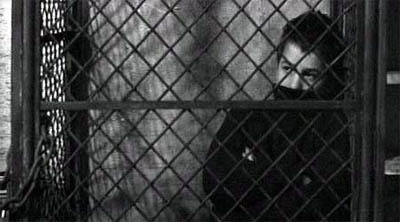
Antoine in jail

The other extreme of shots is where Antoine is in a tight, enclosed space, such as school, jail, or even his own home. This is to represent how Antoine feels trapped, not sure where he fits in in life and society but still blamed and punished for things he does not understand. Furthermore, these shots become more frequent as the movie progresses, showing more and more how Antoine finds himself continuously trapped.